Brazil – A Grand Source of Pride in Global Agriculture
Brazil is the third largest agricultural producer and exporter in the world, behind only the two global agricultural powers: the United States and the European Union. Thanks to its continental dimensions and diverse climates, the country is able to produce a high volume of food, with standout crops including sugarcane, soybeans, corn, coffee, tobacco, cocoa, among others.
Sugarcane
Sugarcane was brought to Brazil by the Portuguese in the 16th century. According to the IBGE (Brazilian Institute of Geography and Statistics), sugarcane occupies about 10% of all agricultural land in the country and accounts for just over 17% of national exports. Brazil is considered the world’s largest sugarcane producer, exporting mainly to the United States, Europe, and Russia.
Coffee
Coffee has also been one of the most important products in Brazil’s agroeconomic history. It accounts for nearly 10% of agribusiness exports. In total, almost 70% of all coffee produced in Brazil is destined for the international market. We are considered the largest coffee producer in the world.
Soybeans
Soybeans are the main agricultural product in Brazil, although the global leader in production remains the United States. Over the past decades, soy has become essential to Brazil’s agricultural output and exports. It accounts for more than 9% of Brazil’s total trade balance and occupies the largest portion of arable land. The majority of production is destined for the foreign market.
Tobacco
Tobacco is one of the few major agricultural products in Brazil that is mostly grown on small properties. Its production has fluctuated in recent years, largely due to international and national campaigns to reduce tobacco consumption.
Corn
In global corn production, Brazil ranks third, behind only the United States and China. Half of the production is carried out by small farmers, while the other half is handled by large properties.
Cocoa
Cocoa is a crop native to Brazil. The country is one of the world’s leading cocoa producers, exporting mainly to Argentina, the United States, Europe, and Japan.
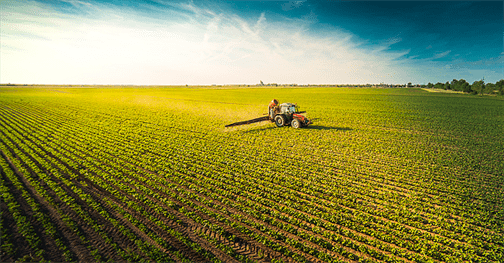
Agricultural production in Brazil today, as in other countries, depends on technology. After all, mechanization has revolutionized agribusiness, increasing productivity and the efficiency of many processes. In the past, productivity was low, and pests could devastate entire crops, wiping out days and months of work invested in growing a single food source.
Back then, farmers performed tasks such as soil preparation, fertilization, planting, pesticide application, and harvesting using human labor and animal assistance. Mechanization now supports farmers in all of these tasks, enabling faster and more efficient operations.
Today, there are many products available to assist farmers, but using quality equipment is essential for ensuring a good harvest. In addition, evaluating agricultural machinery helps boost crop productivity and preserve equipment durability.